
Welcome Father James This Weekend
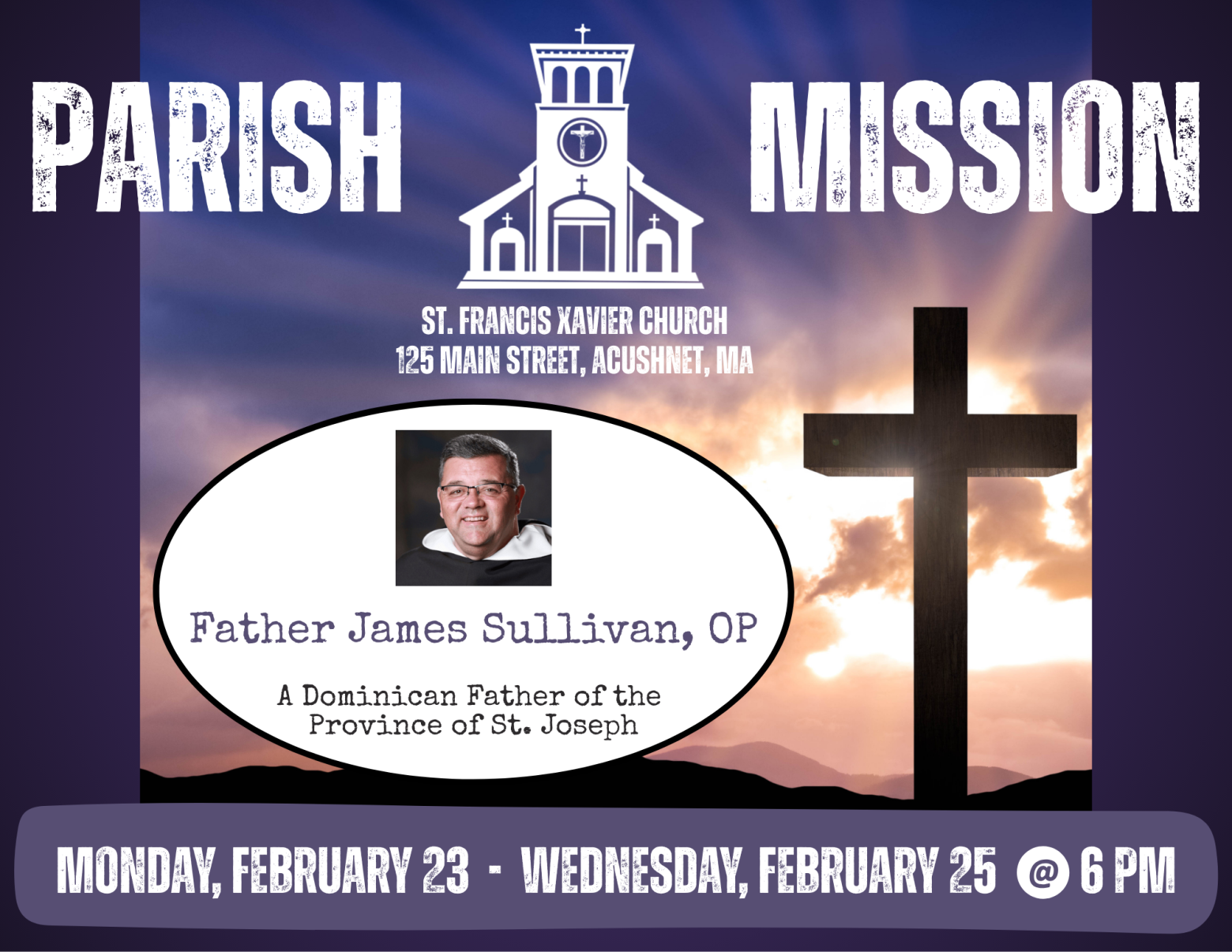
This weekend we welcome Father James Sullivan, OP, who will be preaching at all of our Masses ahead of next week's Lenten Mission.
Father James, a native of Boston, is the Prior of St. Dominic Priory in Washington, D.C., and a seasoned mission and retreat preacher. I first met Father James in 2018 when he served as a spiritual director at the seminary during my final year. He was one of my favorite homilists and priests during my time there, and I am very grateful that he is coming to St. Francis Xavier for our Lenten Mission.
Father James will also be at the 9:00am Mass on Monday and Tuesday morning, with Confession available afterward. On Wednesday, he will offer a 9:00am Mass as well (this Mass is not usually on the schedule), again followed by Confession.
Each evening, Monday through Wednesday, the mission will begin at 6:00pm with a talk, followed by Eucharistic Adoration and the opportunity for Confession.
I know the forecast is calling for snow on Monday. As of now, we are planning to hold the mission at 6:00pm as scheduled. If anything changes, I will send an update through Flocknote. Please pray for good weather!
For those who may not be able to attend each evening, I do plan to try to record the mission talks and make them available on our parish website afterward. Of course, there is something special about being present in the church, but I hope the recordings will be a helpful option for those who are unable to join us in person.
I am also including below another video talk from Father James if you would like to listen to him ahead of this weekend.
Lent is always an invitation to go a little deeper and make a little more room for the Lord. I hope you will consider joining us for these days of grace.
Father James, a native of Boston, is the Prior of St. Dominic Priory in Washington, D.C., and a seasoned mission and retreat preacher. I first met Father James in 2018 when he served as a spiritual director at the seminary during my final year. He was one of my favorite homilists and priests during my time there, and I am very grateful that he is coming to St. Francis Xavier for our Lenten Mission.
Father James will also be at the 9:00am Mass on Monday and Tuesday morning, with Confession available afterward. On Wednesday, he will offer a 9:00am Mass as well (this Mass is not usually on the schedule), again followed by Confession.
Each evening, Monday through Wednesday, the mission will begin at 6:00pm with a talk, followed by Eucharistic Adoration and the opportunity for Confession.
I know the forecast is calling for snow on Monday. As of now, we are planning to hold the mission at 6:00pm as scheduled. If anything changes, I will send an update through Flocknote. Please pray for good weather!
For those who may not be able to attend each evening, I do plan to try to record the mission talks and make them available on our parish website afterward. Of course, there is something special about being present in the church, but I hope the recordings will be a helpful option for those who are unable to join us in person.
I am also including below another video talk from Father James if you would like to listen to him ahead of this weekend.
Lent is always an invitation to go a little deeper and make a little more room for the Lord. I hope you will consider joining us for these days of grace.
Lenten Resources from the Diocese

Still Available This Weekend

Again this year, we will be providing the Magnificat Lenten Companion for anyone who would like one. These small booklets are beautifully done and normally retail for $4.99, but we are making them available to you as a gift to help you pray more intentionally during Lent.

We will also be providing our parish Lenten Offering Boxes. I invite you to take one home and place it somewhere visible. Throughout Lent, you might fill it with loose change or a small offering connected to a sacrifice you are making. It becomes a reminder that our prayer and fasting are always meant to lead to generosity.
This year, our parish Lenten charity will be our Parish Seminarian Fund. Many years ago, Monsignor O’Connor established this fund to support young men from our parish who enter the seminary. Thanks to the generosity of past fundraisers, the fund has sustained our seminarians for well over a decade. Now it is time to replenish it once again.
Your Lenten sacrifices will directly support vocations from right here in our parish, including Lucas daCosta and Noah Pollard, helping provide the practical support they receive each semester as they continue their formation for the priesthood.
Please return your offering boxes by the end of Lent. Together, as a parish, we can help raise up the next generation of priests.
This year, our parish Lenten charity will be our Parish Seminarian Fund. Many years ago, Monsignor O’Connor established this fund to support young men from our parish who enter the seminary. Thanks to the generosity of past fundraisers, the fund has sustained our seminarians for well over a decade. Now it is time to replenish it once again.
Your Lenten sacrifices will directly support vocations from right here in our parish, including Lucas daCosta and Noah Pollard, helping provide the practical support they receive each semester as they continue their formation for the priesthood.
Please return your offering boxes by the end of Lent. Together, as a parish, we can help raise up the next generation of priests.
Stations of the Cross Begin This Evening
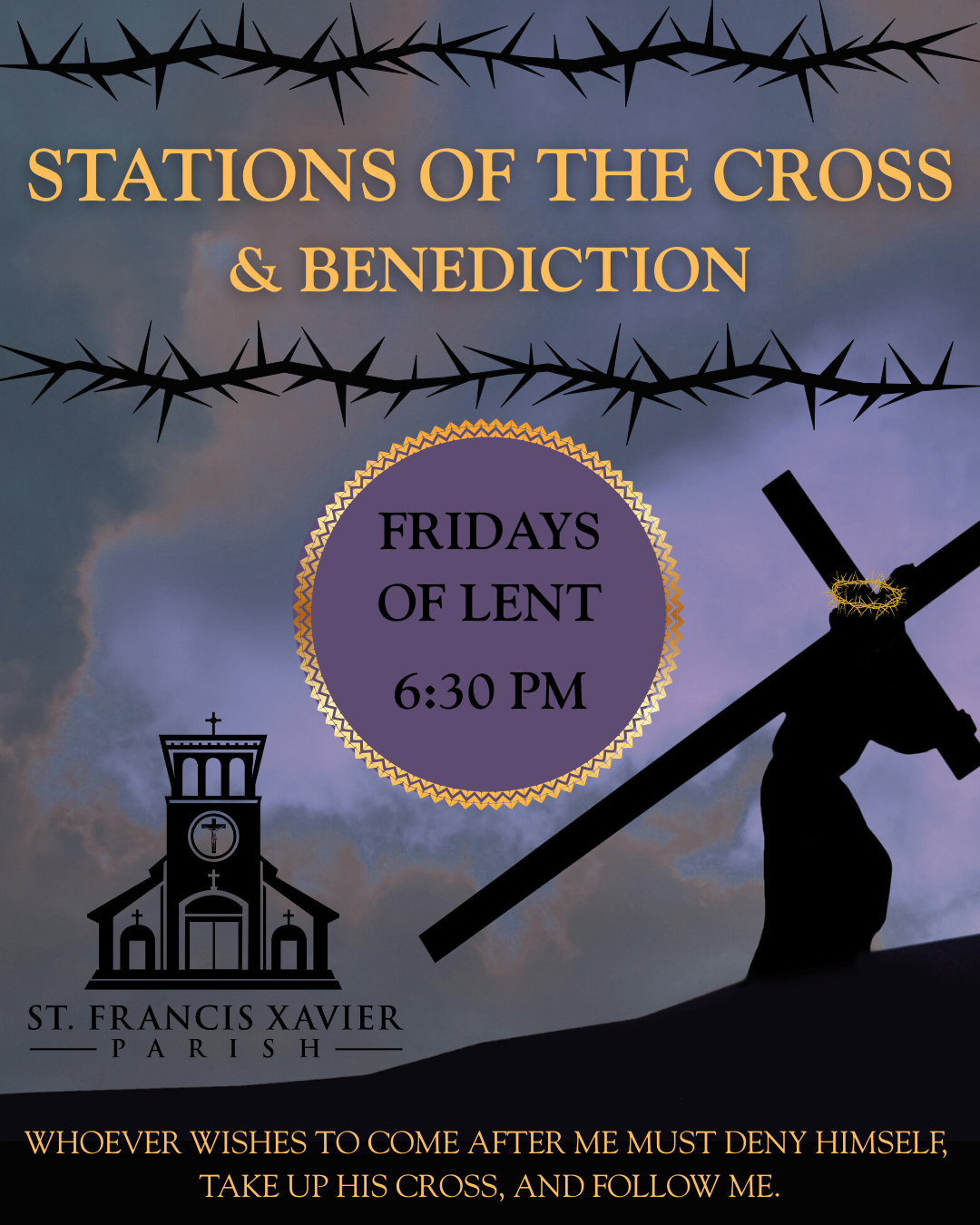
I know the roads are not ideal this evening, but we are planning to have Stations of the Cross at 6:30pm as scheduled. Please use good judgment and be safe if you plan to make the trip.
Keeping Our Parish Safe This Winter
I am looking for someone who would be willing to help the parish this winter by serving as a seasonal “snow and ice monitor.”
Each winter, keeping an eye on snow and ice around the church requires attention, especially with changing temperatures and overnight refreezing. Because we have overnight Adoration, those early morning hours are always in the back of my mind. I want to be sure that anyone coming to pray, as well as those attending daily or weekend Mass, can walk safely.
We do have a snow removal company that handles the major storms, plowing, and heavy shoveling. What I am looking for is someone who could serve as a daily winter helper, watching the weather, checking conditions in the early morning when needed, applying salt if necessary, and doing light shoveling in smaller areas to make sure walkways are safe.
This would be a paid, seasonal role that could be a good fit for someone retired or with a flexible schedule who would like to serve the parish. Compensation can be discussed and could be structured per visit or as a seasonal stipend.
If this might be something you would consider, or if someone comes to mind, please reach out to me directly at rjh@sfxparish.com
Each winter, keeping an eye on snow and ice around the church requires attention, especially with changing temperatures and overnight refreezing. Because we have overnight Adoration, those early morning hours are always in the back of my mind. I want to be sure that anyone coming to pray, as well as those attending daily or weekend Mass, can walk safely.
We do have a snow removal company that handles the major storms, plowing, and heavy shoveling. What I am looking for is someone who could serve as a daily winter helper, watching the weather, checking conditions in the early morning when needed, applying salt if necessary, and doing light shoveling in smaller areas to make sure walkways are safe.
This would be a paid, seasonal role that could be a good fit for someone retired or with a flexible schedule who would like to serve the parish. Compensation can be discussed and could be structured per visit or as a seasonal stipend.
If this might be something you would consider, or if someone comes to mind, please reach out to me directly at rjh@sfxparish.com
Adoration Over the Next Few Days
Please note the following changes to our Adoration schedule due to the winter weather:
There will be no Adoration tonight beginning at 4:00pm through 9:30am tomorrow (Saturday) morning.
There will also be no Adoration on Monday (Feb. 23) during the day or overnight due to the anticipated snow. Monday morning Mass will be held as usual.
Adoration is planned to resume on Tuesday morning following the 9:00am Mass.
Please stay safe in the coming days.
There will be no Adoration tonight beginning at 4:00pm through 9:30am tomorrow (Saturday) morning.
There will also be no Adoration on Monday (Feb. 23) during the day or overnight due to the anticipated snow. Monday morning Mass will be held as usual.
Adoration is planned to resume on Tuesday morning following the 9:00am Mass.
Please stay safe in the coming days.
Men of St. Joseph Men's Night Recap
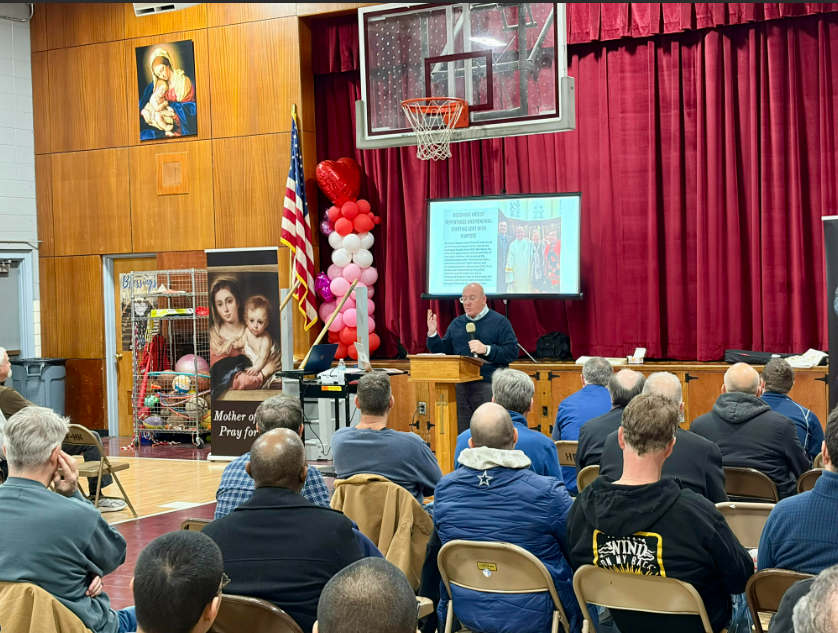
We had a great turnout last night for Men of St. Joseph, with nearly 60 men from SFX and surrounding parishes gathering for Deacon Tony Pimentel’s talk on Lent. It was an encouraging night for the men.
We were blessed to have Father Sudhir and Father Leonard with us to assist with confessions. Nearly half the men in attendance took the opportunity to go to confession.
Thank you to Deacon Tony for his talk and to Jay Hamel for organizing the evening and helping make it such a success.
We were blessed to have Father Sudhir and Father Leonard with us to assist with confessions. Nearly half the men in attendance took the opportunity to go to confession.
Thank you to Deacon Tony for his talk and to Jay Hamel for organizing the evening and helping make it such a success.
Below is the recording of Deacon Tony's talk:
Women of Grace Lenten Holy Hour - March 10th

St. Francis Xavier School

The paragraph below was somehow deleted from last week's newsletter which explained the photo above.
[Last Friday] was especially exciting as we headed into February vacation. We were grateful to host a special assembly that had originally been planned for Catholic Schools Week. Our students enjoyed a livestream concert and talk from Christian musician Seph Schlueter, one of the writers of our school theme song this year, Counting My Blessings. Seph spoke about his life as a musician, how he seeks to serve the Lord through his work, and how we never quite know how God will use the gifts He has given us. It was a meaningful and joyful way to send everyone into the break.
St. Francis Xavier School - Enroll Now!

Adorers Needed

We are currently in need of committed adorers for the following hours:
Tuesdays 1:30-2:30 AM
Tuesdays 1:30-2:30 AM
Wednesdays 2:30-3:30 AM
Thursdays 1:30-2:30 AM
If you are able to take one of these hours and spend time with Our Lord in the Blessed Sacrament, please contact Mary Cardoza at 774-526-1444.
Your presence makes Adoration possible here at St. Francis Xavier.
If you are able to take one of these hours and spend time with Our Lord in the Blessed Sacrament, please contact Mary Cardoza at 774-526-1444.
Your presence makes Adoration possible here at St. Francis Xavier.


Christ in the Desert by Ivan Kramskoi (1872)
A Homily for this Sunday from Fr. Mike Schmitz (homily starts at 9:15)
Holiness in Our Time
I’d like to begin again highlighting a “Holy One of the Week” here. Rather than featuring someone on the cover of the bulletin, this will just be a short spotlight here.
I'll highlight someone from our own recent times who is on the path toward sainthood whose anniversary of death falls in the week ahead.
The purpose is to learn about these holy men and women, to see how they lived the Gospel in ordinary circumstances, and to be inspired to pursue holiness in our own day.
St. Josemaría Escrivá once said, “The crises of the world today are crises of saints.” What the world needs most is more saints. May their witness remind us that holiness is not only for the past.
I'll highlight someone from our own recent times who is on the path toward sainthood whose anniversary of death falls in the week ahead.
The purpose is to learn about these holy men and women, to see how they lived the Gospel in ordinary circumstances, and to be inspired to pursue holiness in our own day.
St. Josemaría Escrivá once said, “The crises of the world today are crises of saints.” What the world needs most is more saints. May their witness remind us that holiness is not only for the past.
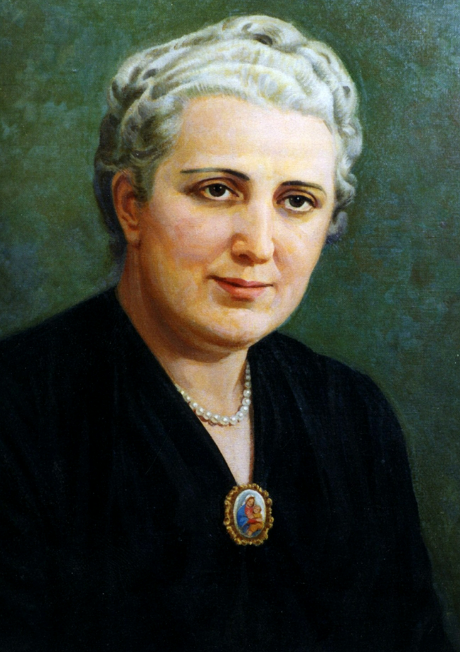
Servant of God Matilde Salem
November 15, 1904 – February 27, 1961
Anniversary of Death: Feb. 27
A Syrian Catholic laywoman from Aleppo who endured a difficult marriage and, after her husband’s death, devoted herself wholeheartedly to serving the poor, educating the young, and living a life of quiet but heroic charity.
A Syrian Catholic laywoman from Aleppo who endured a difficult marriage and, after her husband’s death, devoted herself wholeheartedly to serving the poor, educating the young, and living a life of quiet but heroic charity.
A Note on Latin During Lent
During Lent, we once again incorporate some of the Mass parts in Latin, as we have done here for many years. The Church’s sacred language unites us with Catholics throughout the world and across the centuries. Thank you for entering into it prayerfully.
Below is a short video from EWTN explaining why the Church continues to treasure Latin in the liturgy and how it connects us to our sacred musical heritage.
Mass Times
Sunday: 8:00 AM | 10:30 AM
Saturday Vigil: 4:00 PM
M, T, Th, F, S: 9:00 AM
Sunday: 8:00 AM | 10:30 AM
Saturday Vigil: 4:00 PM
M, T, Th, F, S: 9:00 AM
First Friday: 9:00 AM | 6:00 PM
Adoration Times
Monday-Friday
6:30am-8:45am, 9:30am-7:30pm
6:30am-8:45am, 9:30am-7:30pm
Wednesday
6:30am-7:30pm
Saturday
6:30am-8:45am, 9:30am-2:45pm
6:30am-7:30pm
Saturday
6:30am-8:45am, 9:30am-2:45pm
Confession Times
Monday: 5:30–6:30 PM
Saturday: 9:30–10:00 AM | 3:00–3:45 PM
Monday: 5:30–6:30 PM
Saturday: 9:30–10:00 AM | 3:00–3:45 PM
First Friday: 6:45–7:15 PM
Anytime by Appointment
To add someone to this weekly newsletter, they can either text the word ACUSHNET to 84576 or sign up at sfxparish.flocknote.com.